
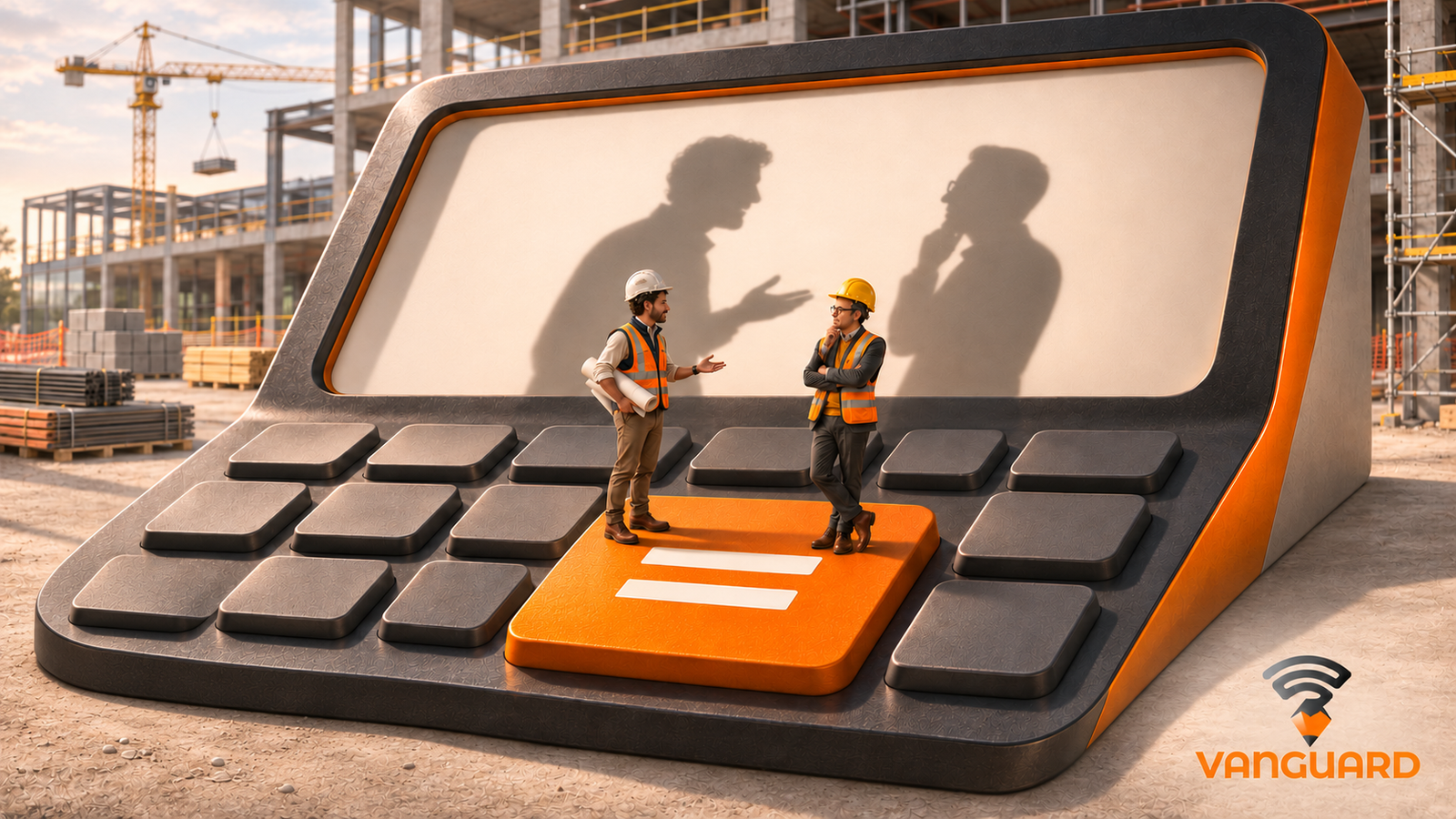
A conversation with a mate at the kids’ footy training got me thinking about where business development stops and estimating starts.
After decades in business development, I find myself using those skills constantly when estimating. Often without consciously thinking about it.
At a tender walk, you haven’t measured anything, spoken to your subcontractors or started putting a price together. But the client is already forming an opinion.
Have you prepared? Are you interested in the project? Do you understand what they’re trying to achieve? Can they have an enjoyable, straightforward conversation with you?
By the time your quotation arrives, they’ve already had a small experience of dealing with your company. That experience will influence how they read your price.
Build some rapport first
When you know your stuff, it can be tempting to get straight into identifying problems.
The programme is too short. The budget won’t cover the scope. There’s a lead time nobody appears to have considered.
You may be right about all of it. But you’ve barely introduced yourself.
Take an interest. Listen. Give the client a chance to get comfortable with you before you start pulling apart their plans.
I’ve found difficult conversations work much better once you’ve built that rapport. The client has had a chance to see that you understand what they want and that you’re trying to help.
You still need to tell them the truth. You’re simply in a better position to have a useful conversation about it.
Ask a question that helps
I try to put myself in the client’s position. What is their biggest concern? What do I need to understand before offering an opinion?
Imagine a tender walk where the conversation keeps coming back to the completion date. A particular item has a long lead time.
I might ask, “If we explored making that a client purchased item so it could be ordered earlier, would that help take some pressure off the programme?”
We would need to check the responsibilities, interfaces and commercial implications. It won’t suit every project.
But now we’re exploring an option together. I’ve listened to the concern and brought some construction knowledge to the conversation.
A question like that also gives the client an opportunity to explain something I may have missed. I can repeat it back, check I’ve understood and work from there.
I make the same assessment of subcontractors
When I meet a subcontractor, I start forming a view quite quickly.
Preparation helps. Taking an interest in the project helps. Disinterest is off putting.
Someone who asks a thoughtful question about the work gives me something to work with. I can begin to understand how they approach a job.
I still need to assess their price, capability and availability. A good conversation doesn’t replace those checks. But it does influence my confidence in dealing with them.
Why would a client assess me any differently?
Where does BDM stop and estimating start?
I’ve seen technically strong estimators struggle to connect with clients. I’ve also seen polished business development people struggle when the technical questions start.
Both can frustrate the client.
Someone who can lighten the mood, understand the work and instil confidence is hard to beat.
They can ask about the opportunity, understand the constraints, develop the price and explain the reasoning. The conversation can keep moving without the client having to start again with somebody else.
My view is that, for many builders, the traditional BDM role could be better served by an estimator who can do both.
That requires time and support. You cannot keep someone buried in tenders all week and expect them to build relationships in whatever time is left over.
It also requires sound judgement. Being keen to win a job cannot stop you from explaining a risk, challenging an assumption or saying that something needs more work before you can commit.
Who gets the next phone call?
Clients call me about new work. They seek my advice because they know how I work.
I know what I’m doing. I do what I say I’ll do. I’m reliable, and they enjoy dealing with me.
That relationship has value before there is another tender to price.
I think a builder needs to recognise that value and give clients a consistent point of contact. As a project progresses, the delivery team needs to be involved and responsibilities need to be clear. The client should still feel the understanding built during those early conversations carries through.
An estimator who earns that next phone call is doing business development.
When your clients have another project, who do they call first, and why?